Home Work About Contact
03
3D Animation · Team Project · 2022

Phomo

A fake commercial for a fake app — and a sharp look at how social media turns loneliness into performance.

Type

3D Animated Short Film

Role

Technical Art Director

Software

Maya · ZBrush · Arnold

Duration

3 months · Team of 3

Social media as theatre

Phomo is a 3D animated short film built around a fictional app of the same name — a social platform powered by AI filters that lets users reshape their reality before sharing it. The name collapses two ideas: photo and FOMO, the fear of missing out. It's a parody with a real edge.

At its center is Zoe, a young woman who spends her birthday alone and finds connection only through a curated, algorithmically filtered version of herself. The film follows her from isolation to genuine friendship — and asks whether the app made that possible, or just delayed the real thing.

The project is a direct commentary on Instagram culture: the gap between what people post and how they actually feel, and the strange way performance can sometimes become reality.

Phomo title card

Title Card — Phomo

Visual language

Storyboard & Character Design

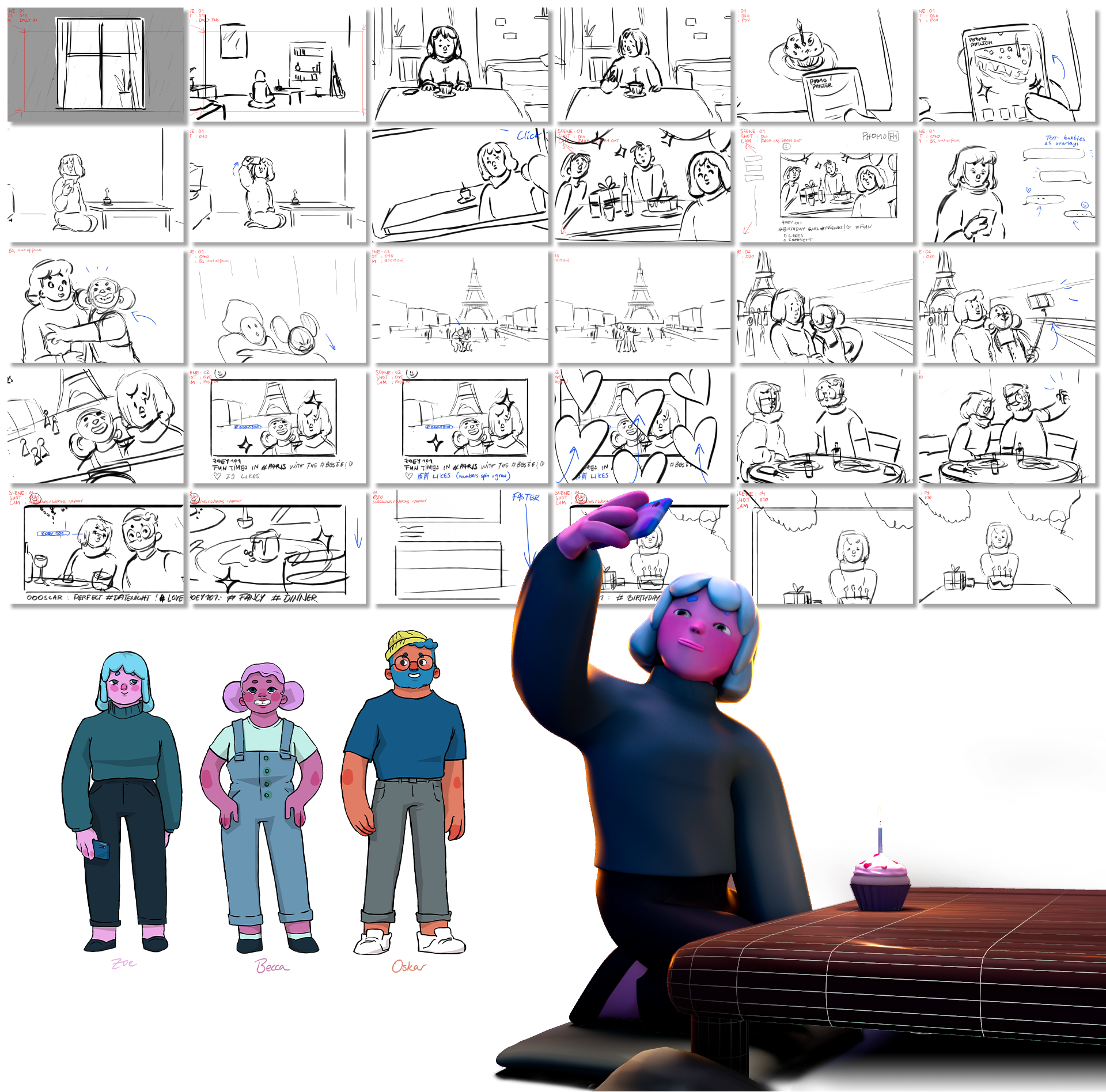
The production started with the storyboard — each shot planned and sequenced before anything was built in 3D. From there, an animatic was cut to lock timing and pacing against the soundtrack, giving the whole team a shared reference throughout production.

Character design was handled by Awesta, who developed the visual identities of all characters. The designs established the proportions, silhouettes, and personalities that everything else was built around.

Storyboard and character design

Modelling & Animation

Each team member built one character from scratch. My character was Zoe — the protagonist. The workflow started with a low-poly base mesh in Maya, moved into ZBrush for surface detail and sculpted hair, and came back into Maya for rigging and skinning.

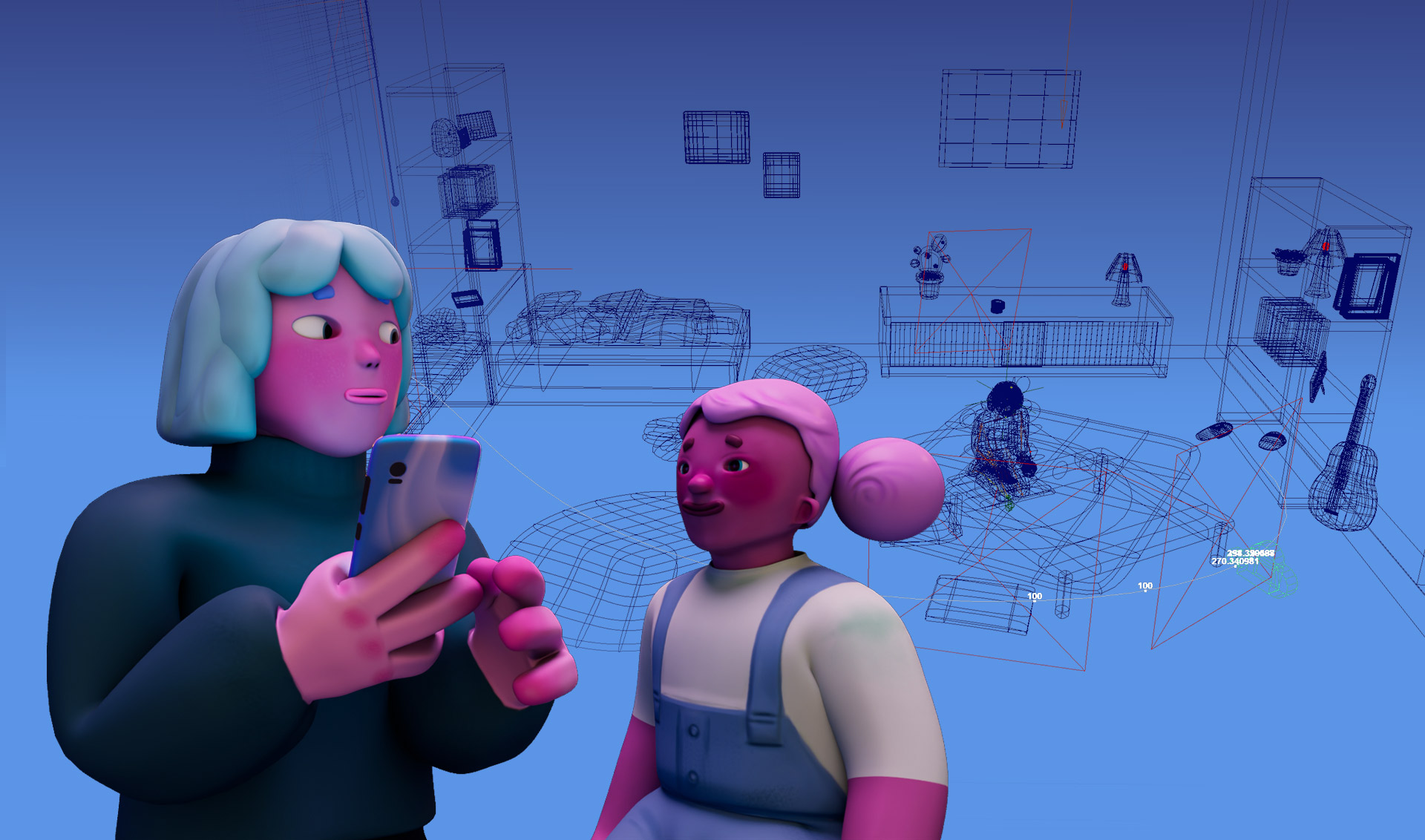
Beyond character work, I modelled the restaurant interior, the Paris exterior set, and key props including the phones and selfie stick. Once the blocking was largely locked in, I refined camera rigs and animated select shots — occasionally adding backgrounds retroactively when new angles demanded them.

Procedural materials with a handmade feel

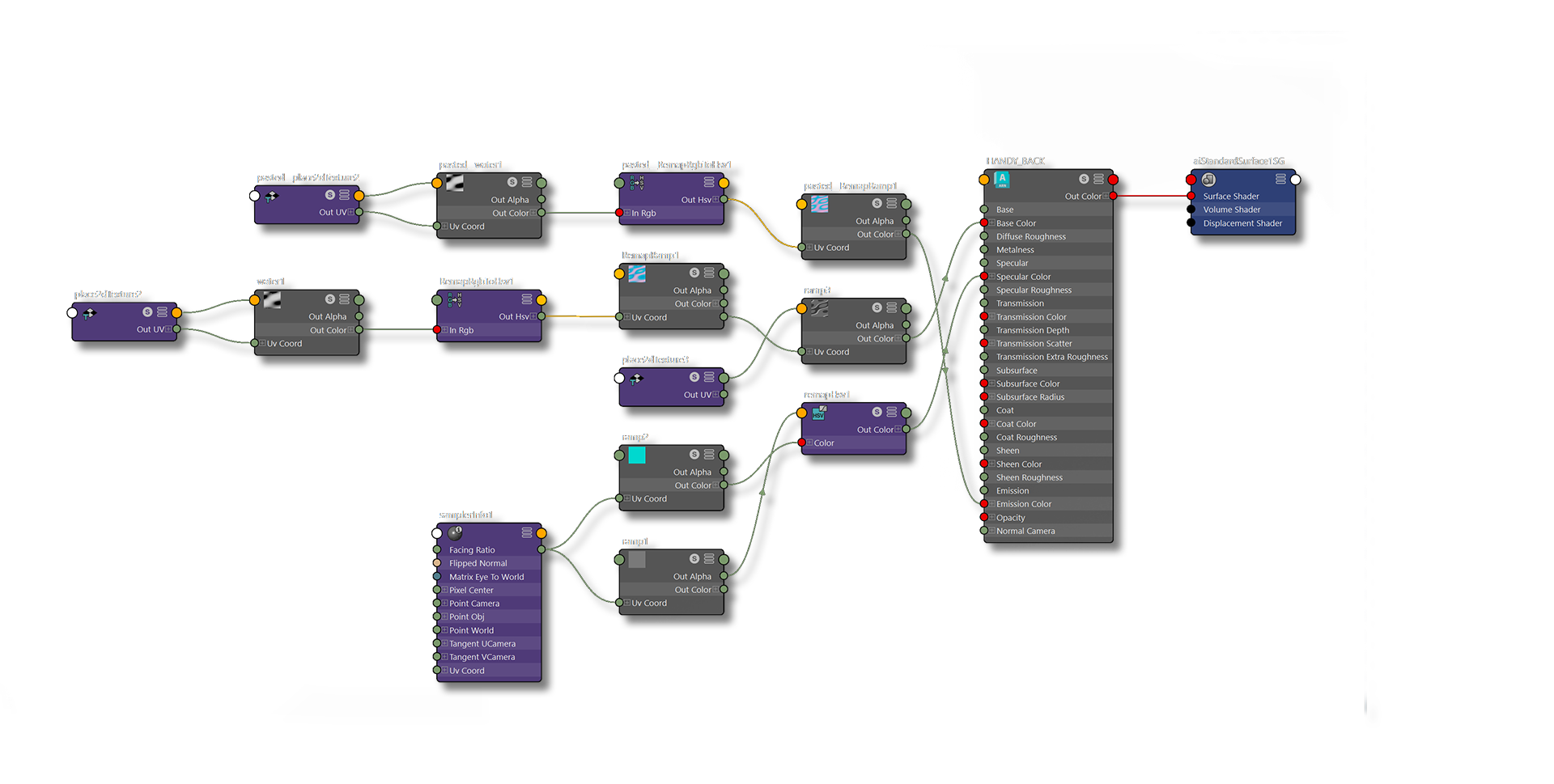
Character textures were hand-painted, but almost all props were textured procedurally — noise maps and color ramps forming the base of each material. The goal was a deliberate tension: bubbly and rubbery in overall feel, but with pockets of unexpected realism.

The phones were a specific challenge. I built a custom shader that shifted color based on the angle between the surface normal and the camera — a subtle iridescence that read differently in every shot. The wood materials used layered procedural maps to avoid the flat look of tiled textures.

Phone material
Restaurant set Room lighting

Physics, flame, and the problem of moving cameras

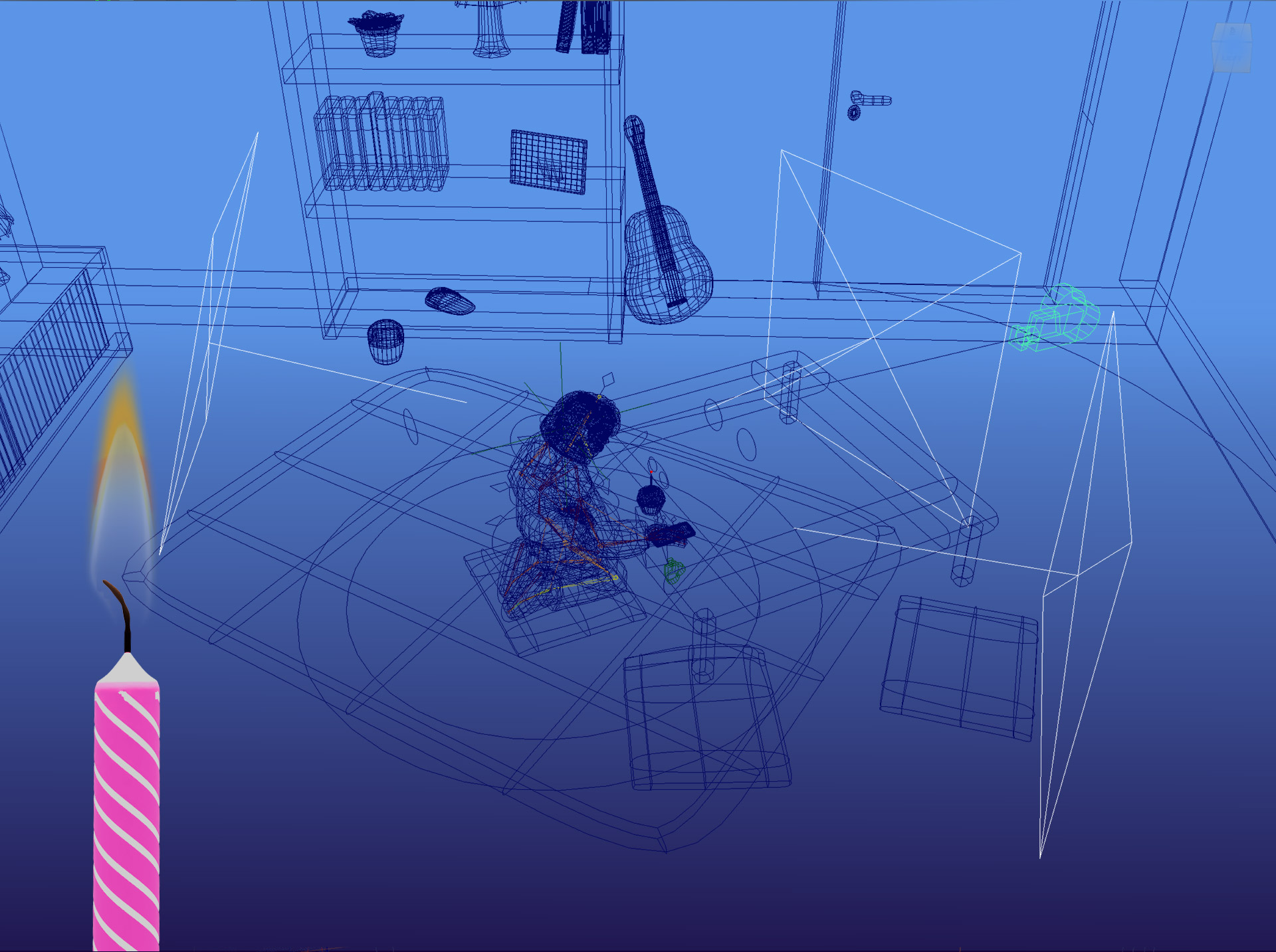
Cloth, fluid, and hair simulations handled fabric, grass, and candle flames. The candles in particular required a procedural solution — flickering light intensity driven by a noise expression rather than keyframes:

CandleLightShape.intensity = clamp(1.5, 3, (noise((time+3500)*2)+2));

Lighting followed a three-point approach throughout — key, fill, and rim — but the real challenge was moving cameras. Whenever the camera tracked a character, rim lights had to be animated frame-by-frame to avoid unwanted shadow shifts. In most scenes, at least one light needed to travel with the shot.

Render passes as insurance

Every scene was rendered in separate layers — characters, set, and props isolated from each other. This was a deliberate choice, not just a technical one. Strong rim lights were flooding scenes, and separating elements meant those could be controlled in comp without re-rendering.

Additional passes included Z-depth for background blur, cryptomatte for tracking, and ambient occlusion for shadow control. Individual lights were split into AOVs for granular compositing. OIDN denoising handled the render time without sacrificing quality.

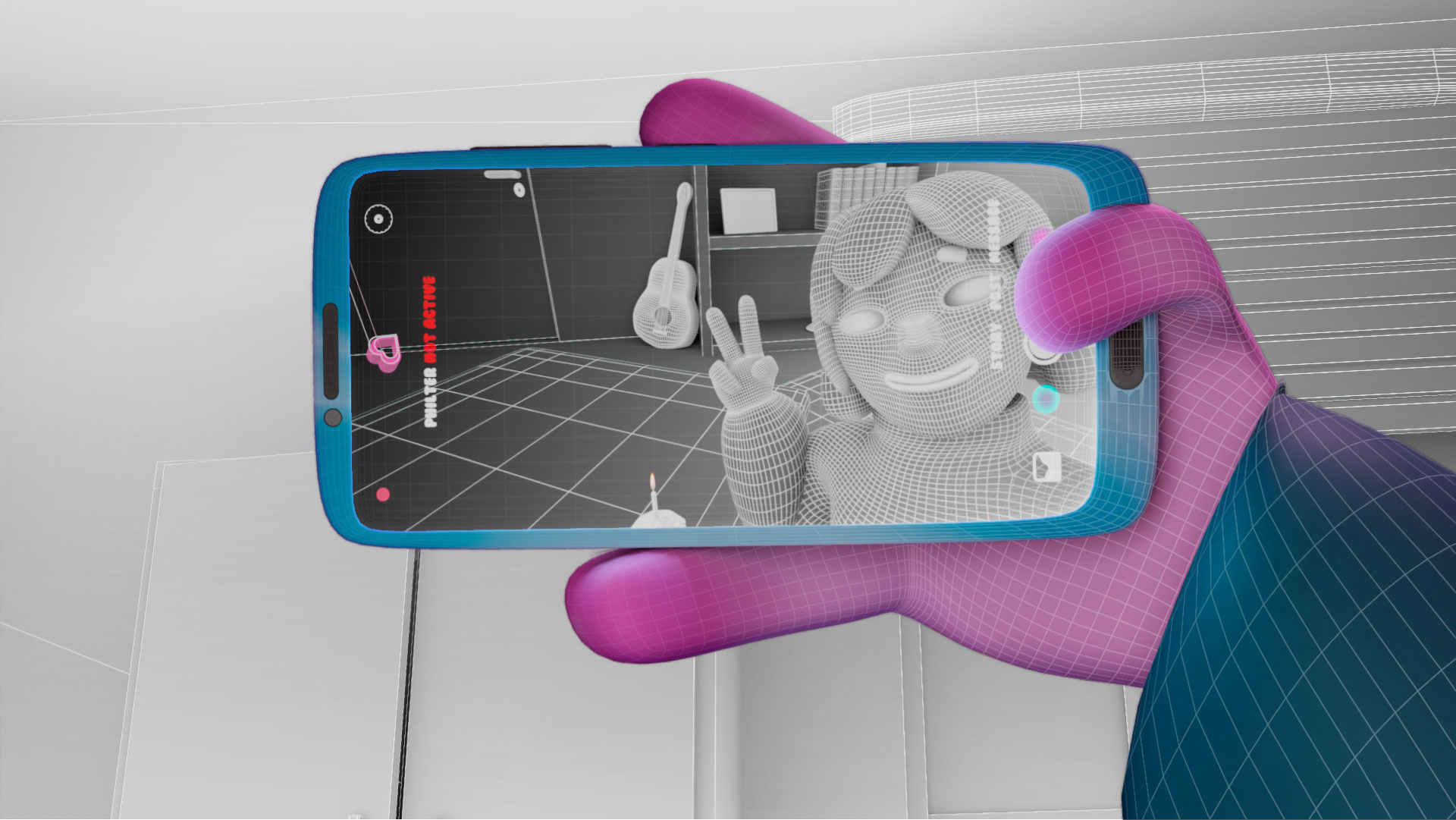
Selfie shot

The hardest shot was a phone screen

The render layer setup paid off in compositing — layers merged cleanly and the AOVs gave precise control over every light source. The trickiest element was the phone screens: tracking them and inserting the "screens" — which were actually separate camera renders — required careful frame-by-frame work.

The flash effects and transitions between 3D and 2D scenes were built from scratch. Color management used a linear ACEScg workflow with OpenColorIO. Motion blur was added in compositing to keep render times manageable.

Sound design used Artlist.io's library as a base, processed through parametric EQs, pitch shifting, time remapping, and reverb in Premiere Pro. The final mix included Awesta's voice-over with deliberate pauses introduced during editing to improve pacing and comedic timing.

Autodesk Maya ZBrush Arnold Render After Effects Premiere Pro Photoshop Illustrator

Team project with Ana & Awesta Rogh — Høgskulen i Volda, Norway, 2022.
Role: Technical Art Director, Character Lead (Zoe), Look Development, Rendering, Compositing, Sound Design.

All Work